
|

|
Landbouw Internationaal: |
|
|
Voedsel ruilen tegen zeldzame aardmetalen Op: www.amsterdamsmilieu.nl, 6 maart 2012 Lees het artikel online >> |
Intro: Decennia geleden werd het al voorspeld: toekomstige oorlogen gaan over water en grondstoffen.
Ook voedselgewassen
gelden als 'grondstoffen'. Miljarden aardbewoners maken momenteel een inhaalslag qua
consumptiegedrag. Voor het eerst in de aardgeschiedenis stijgt de dierlijke eiwitconsumptie
uitt boven de plantaardige eiwitconsumptie, aldus Cees Veerman tijdens het debat It’s food, stupid
in het Amsterdamse debatcentrum de Rode Hoed. |
|
Koudwatervrees bij introductie transgene sjalot In: EOS Magazine, oktober 2006  Download pdf >> 745 kb Download pdf >> 745 kb
|
Intro: Plant Research International heeft een genetisch gemodificeerde
sjalot ontwikkeld voor tropische gebieden, maar voorlopig blijft het materiaal
nog op de plank liggen. Zaadbedrijven zijn huiverig om de sjalot
op de markt te brengen vanwege het slechte imago van gentechgewassen en de weinig
lucratieve tropische markt. Dankzij de genetische ingreep maakt de nieuwe Bt-sjalot afweerstoffen tegen de rups
van de floridamot (Spodoptera exigua). Lees ook de update over de Bt-sjalot (januari 2012) >> |
|
Wessanen zet in op biologisch In: Ekoland, oktober 2004 Download pdf >> 558 kb
|
Summary: The Dutch multinational Royal Wessanen was founded in 1765 as a trade company in wheat. Its core business on the North-American continent is transportation of organic food. In 2000, Wessanen bought the French organic brand Bjorg, which meant its first step on the European market for organic food. Wessanen is the main shareholder of Natudis and owns organic brands such as Zonnatura, De Rit, Tartex, Dr. Ritter and Whole Earth. |
|
EKO is nog niet altijd sociaal' In: Ekoland, oktober 2002 Download pdf >> 518 kb
|
|
Summary and current affairs: The British Soil Association is one of the pioneers in setting social standards for organic production. In 2001, it launched the voluntary-based Additional Standards for Ethically Traded Organic. Organic is by no means similar to ethically justified. Ethical standards are being discussed for products bearing the Dutch label for organic, EKO. A well-known social label is Max Havelaar but its environmental standards do not equal EKO-quality. Some products, like the Oké-banana, have both labels. |
|
Biologische teelt op een vulkanisch eiland In: Ekoland, juli/aug. 2002 Download pdf >> 1,5 mb
|
|
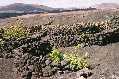
Summary: All seven Canarian islands are volcanic in origin. But only on Lanzarote the volcanic character is clearly visible in the agricultural landscape. Organic and regular farmers cover the soil with a layer of volcanic ash to prevent evaporation. Near the capital Arrecife, the research station on organic agriculture, Finca Piloto de Agricultura Ecológica, works on diversifying the horticultural product range on the island. Photo by A. van Roekel. |
|
Biologisch merk vraagt eigen strategie In: Ekoland, juli/aug. 2001 Download pdf >> 476 kb
|
Summary: Big European supermarkets presented their strategy at the Natural Products Expo Europe. The role of brands should not be underestimated in marketing organics. Transparency is the key for organic products, says Kjell Eklund, brand manager for KF, a Swedish supermarket. KF tries to beat what they call 'modern poverty': consumers are frustrated because of aspects of animal well-being, gmo's and food safety. KF's home brand 'Angelmark' tries to meet the wishes of modern consumers by a factual approach. |
|
Organic is in Verenigde Staten label voor gentechvrij>> In: Ekoland, maart 1999 Download pdf >> 1,5 mb
|
Summary and current affairs: In the United States of America, many multionational companies such as Heinz and Quaker Oats are involved in the organic sector. While the popularity of genetically modified crops (GMO) rose, organic food consumption experienced a real boost and is still expanding. The Organic Trade Association expects that 14 percent of the average U.S. household's budget will be devoted to purchasing organic products in 2005. As labelling GMO's is not a common practice, the organic label in the United States functions as a guarantee for GMO-free food. |
|
Biologische vliegtuigmaaltijden uitdaging voor Martinair Food In: Ekoland, mei 1998 Download pdf >> 452 kb
|
Intro: Martinair Food (Marfo), producent van vliegtuigmaaltijden, gebruikt sinds 1997 zoveel mogelijk biologische ingrediënten in de vliegtuigmaaltijden voor klant Swissair. Marfo heeft inmiddels zes verschillende Natural Gourmet maaltijden op het menu staan. Minstens 50% van de ingrediënten is biologisch en één maaltijd mag officieel het Eko-keurmerk dragen. Dat de 70%-grens van biologische ingrediënten voor de Natural Gourmet maaltijden vaak niet wordt gehaald is te wijten aan de beschikbaarheid en de prijs van biologisch vlees. |
|
Een wereldzee van groene bloemen In: Intermediair, 9 oktober 1997 Download pdf >> 889 kb
|
Intro: De bloemensector krijgt oog voor het milieu: de klant wenst een eco-ruiker. Doordat Nederland de mondiale handel in snijbloemen beheerst, moeten de buitenlandse leveranciers van onze telers en veilers meedoen. |
|
Afrikaanse cacaoboeren slachtoffer van chocoladewetgeving In: Mens & Wetenschap, maart 1997 Download pdf >> 909 kb
|
|
Summary and current affairs: The article discusses the proposal for new European legislation that makes it possible to substitute cocoa butter by other - cheaper - types of vegetable fat in chocolate bars.
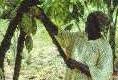
These days, slave-free chocolate is a hot issue. In December 2005, a slave-free chocolate bar is introduced on the Dutch market by journalists of the Keuringsdienst van Waarde. The organic shop Shakie's, located on several Dutch train stations, sells the bars. Photo: Cocoa farmer in Ghana by A. van Roekel |
|
Hollandse ui in de aanval In: Het Parool, 8 februari 1997 Download pdf >> 326 kb
|
Summary and current affairs: Not only are the Netherlands an important onion exporting country. Dutch plant scientists of Wageningen University and Research Centre have been developing better onion varieties by using genes from wild onion species from the Himalaya's. In the nineties, the use of fungicides could therefore be reduced by more than 60%. In 2005, the same team of scientists have developed genetically modified shallots that may become useful in tropical Indonesia, esp. the island of Java. Genes of the Bacillus thuringiensis, known from Bt maize, were used to beet armyworm (Spodoptera exigua Hübner) in transgenic Bt-shallots (Allium cepa L.). |
|
Chocoladefantasie wordt werkelijkheid In: Het Parool, 19 oktober 1996 Download pdf >> 277 kb
|
Intro: Dutch people consume a lot of chocolate, average eight kilo's per capita per year. Future European legislation prescribes that cocoa butter may be substituted by cheaper vegetable fat. Taste, health and African economy will be influenced by the new policy. |
|
Laatste wijziging: 8 april 2013 [home] [top] [contact] [disclaimer] |